Celestropolis
Background & Motivation
Celestropolis actually evolved from a previous project I called FIN. I was dissatisfied with certain aspects of FIN — notably the mixing and the way instruments interacted — and I wanted to try out improved arranging techniques. After analyzing its shortcomings, I began a new musical experiment to validate the theories and ideas I had gleaned, and thus Celestropolis was born. In other words, its original purpose was more technical experimentation than conceptual expression. I explored how to refine mix control, improve instrument coordination, and handle transitions more smoothly.
As the creative process progressed, a larger musical vision gradually emerged in my mind — that of the sky. I began to conceive the project around this aerial theme. But because the piece originated from technical experimentation, its interpretation of “sky” is not simply the serene blue expanse; rather, it embodies a complex, fantastical quality. Over time, a city in the sky materialized in my imagination — like a meticulously woven blueprint of architecture floating among the clouds.
Celestropolis is, to me, the fusion of technology and imagination. This concept — a sky city symbolic of wonder and the unimaginable — became the core around which I shaped the music. Through my composition, I aimed to render and express this idea, painting with sound a vision of an otherworldly metropolis in the heavens.
Techniques
Platform: Ableton Live was used as the primary environment for composition and production.
Sound Sources: The primary sound sources were Ableton's built-in orchestral instruments and expansion packs, with additional sounds sourced from Strobe and Heaviocity.
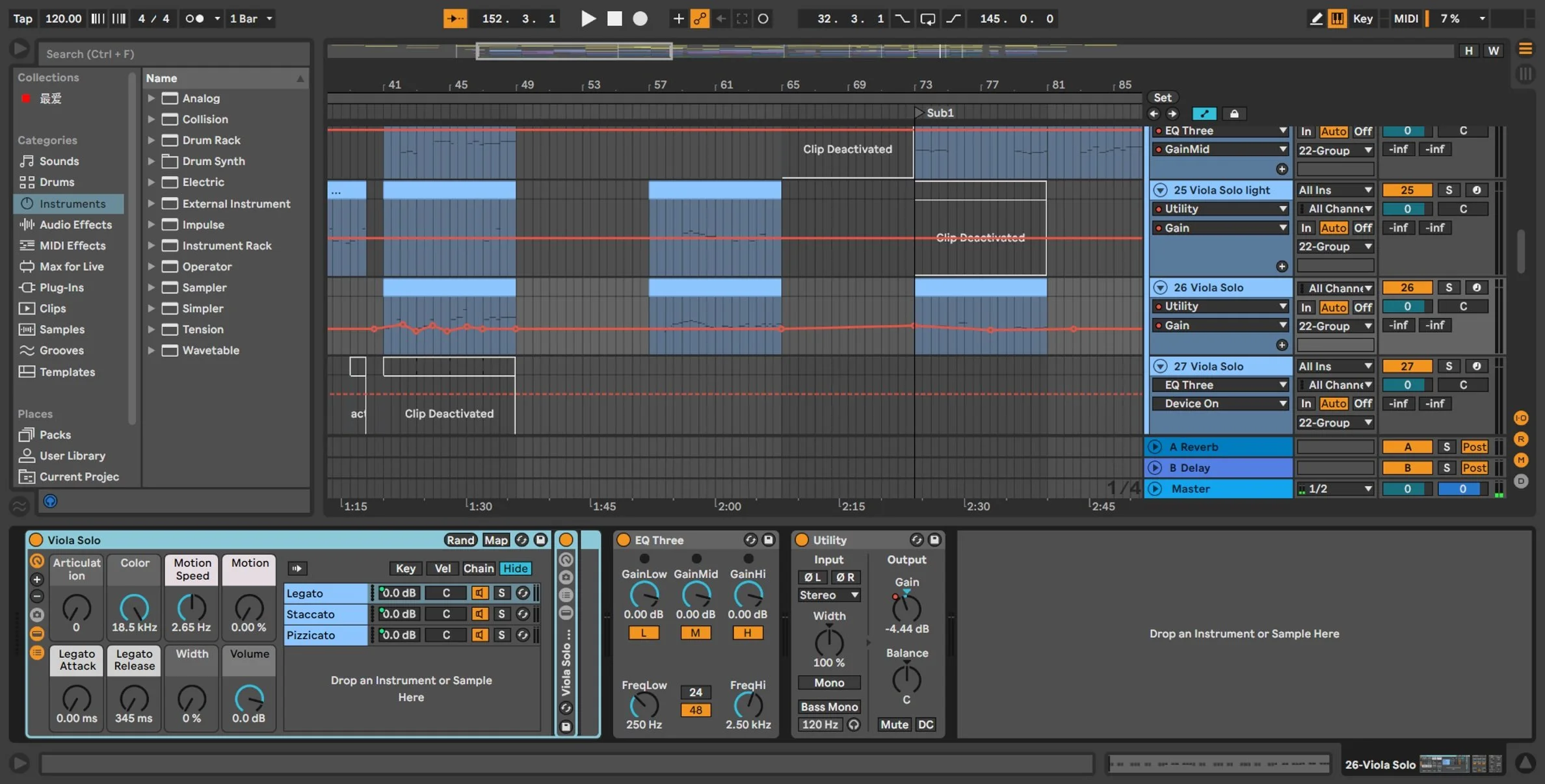
Processing & Effects: Audio was processed using EQ, Reverb, Utility, Compressor, and other effects. Automation was applied to control effect parameters, allowing the sound to evolve over time.
Project Overview
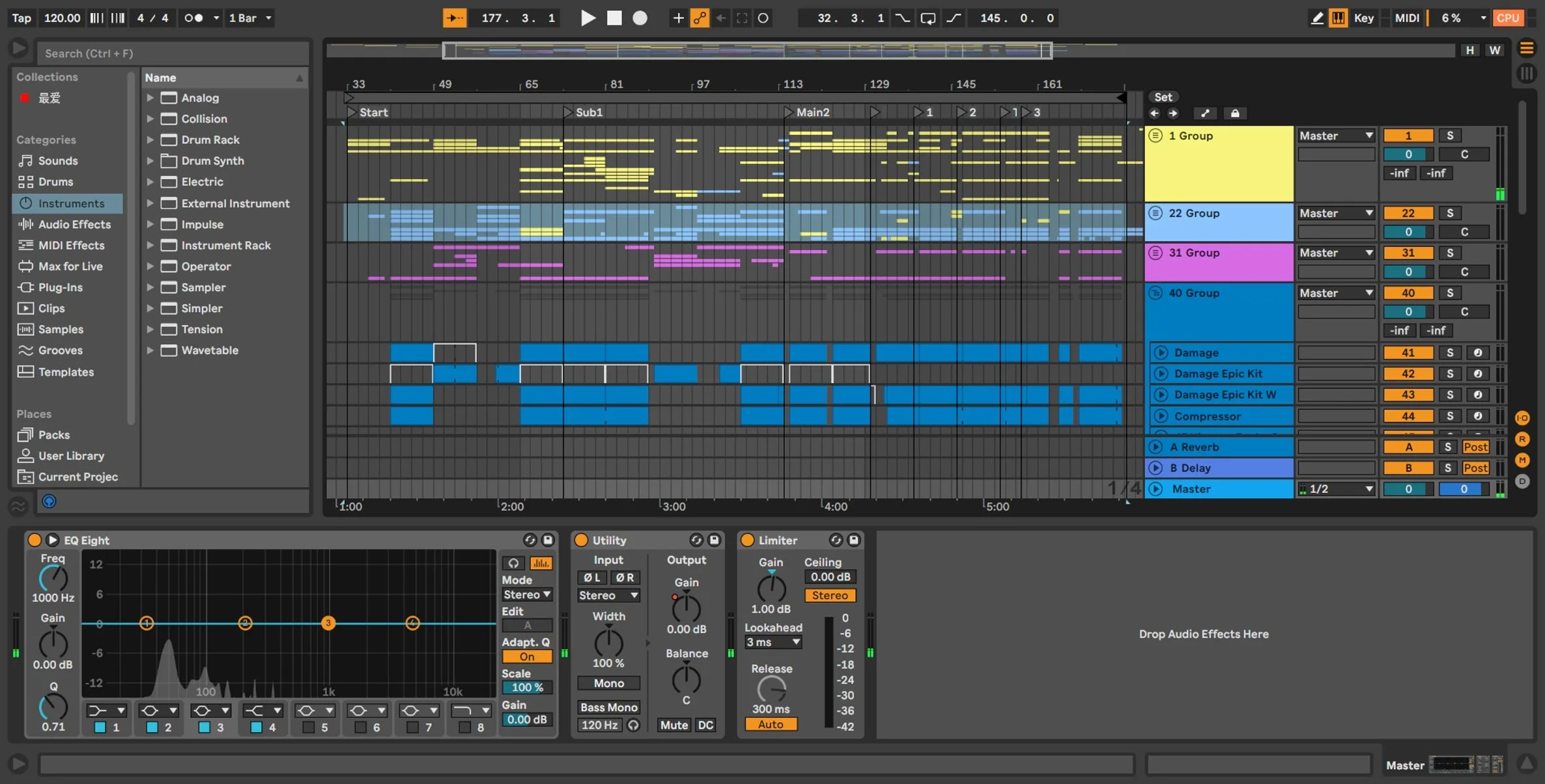
Overview of main tracks in the MIDI arrangement
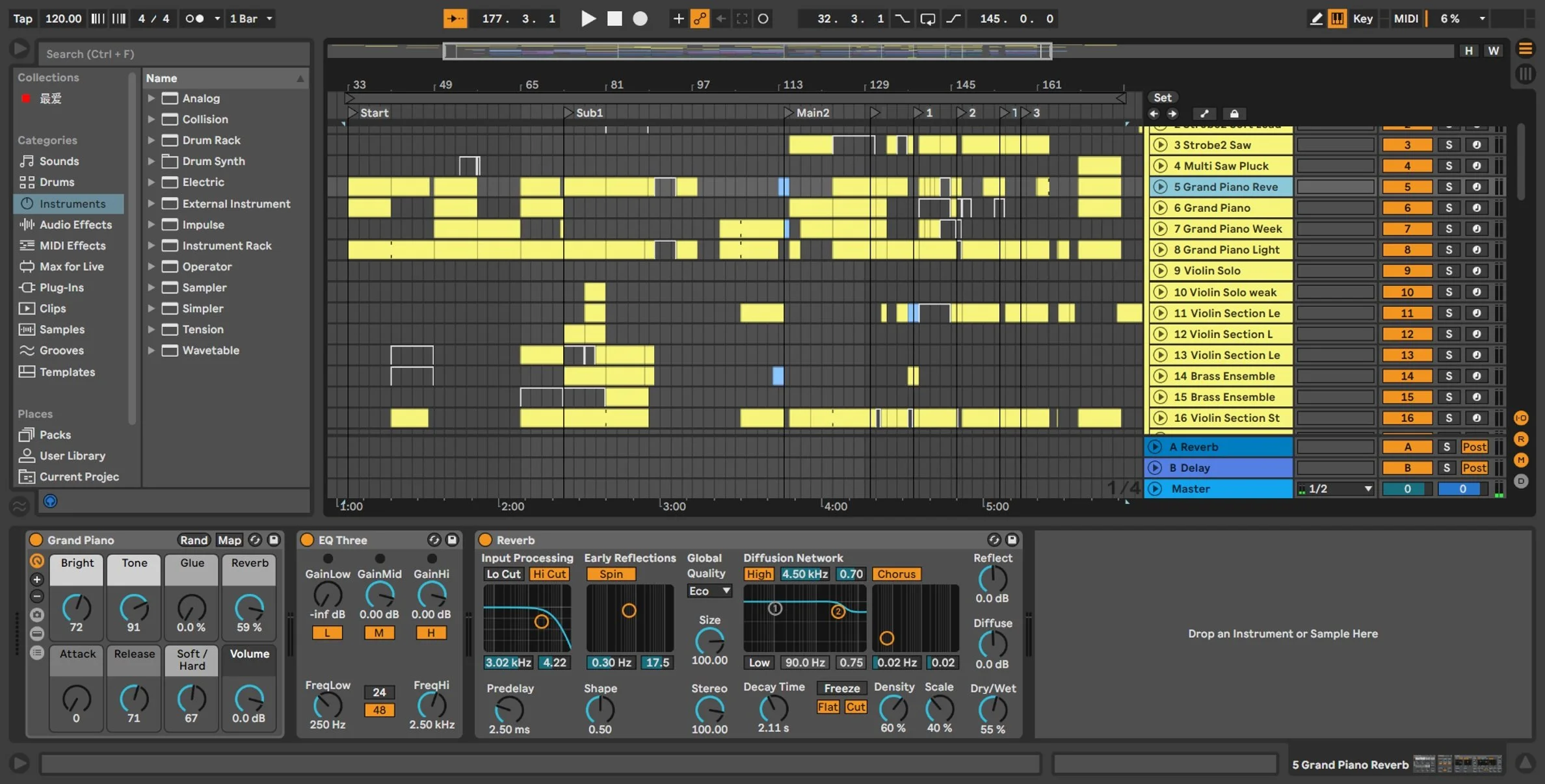
Note content of the piano MIDI clip.

Tracks processed with a sidechain compressor, with Saturator applied as a modifier.
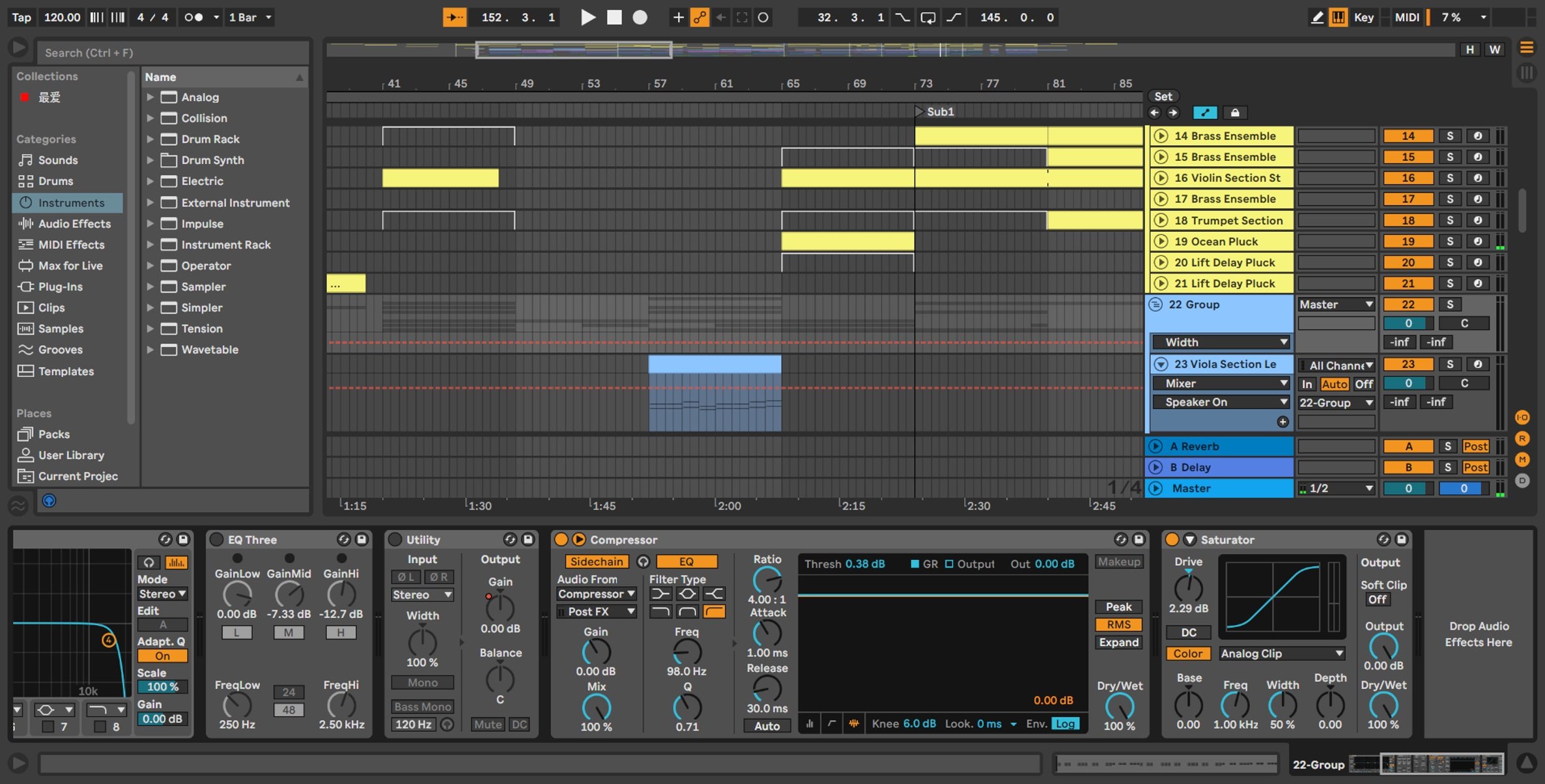
Expanded view of the melodic track group.
EQ Three and Utility automation following the musical rhythm.